
Advances in Prosthodontics Summer 2026
New Findings & Best Practices for Cosmetic & Restorative Dentistry
Do You Have a Patient with Compromised Occlusion?
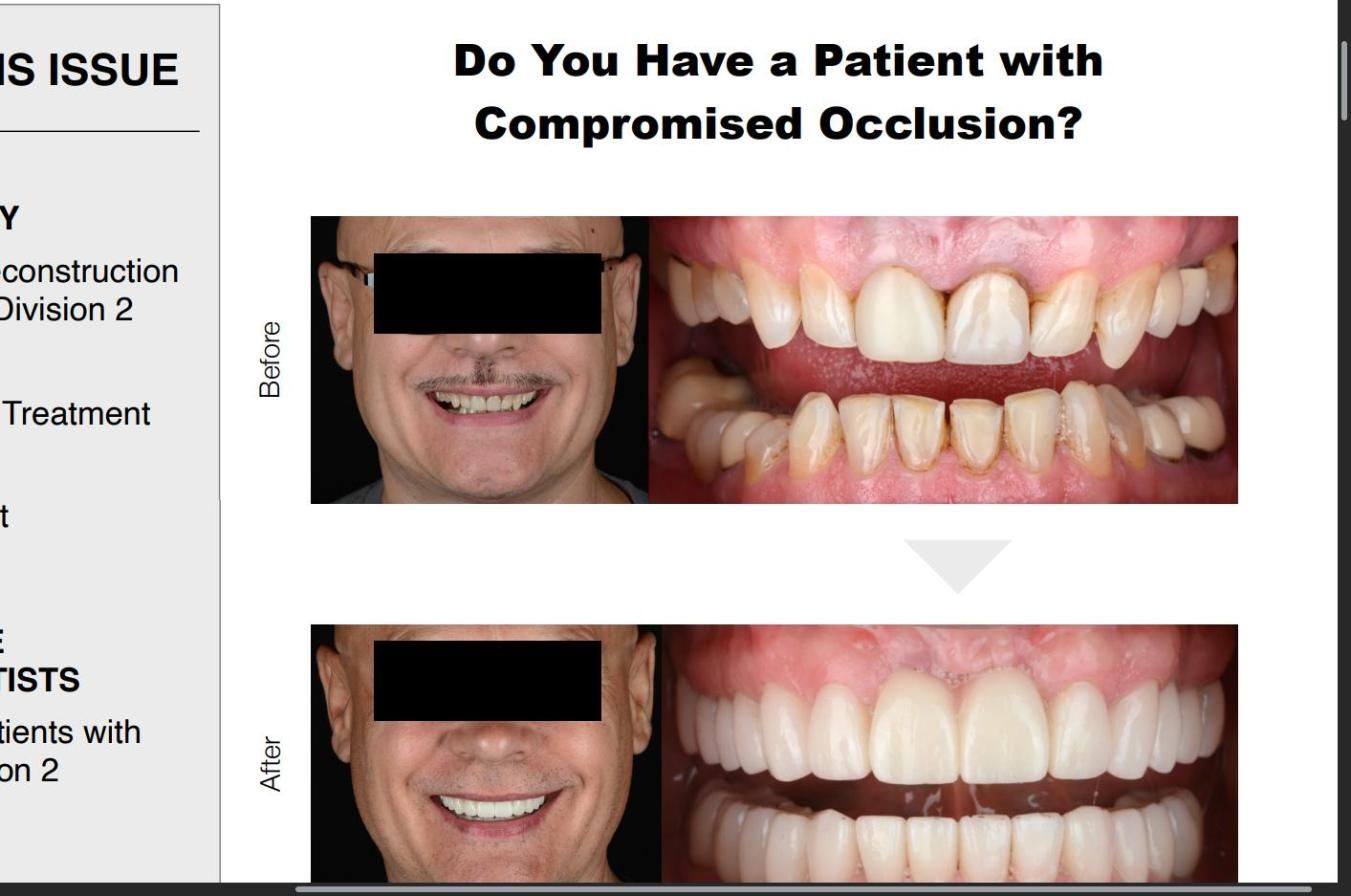
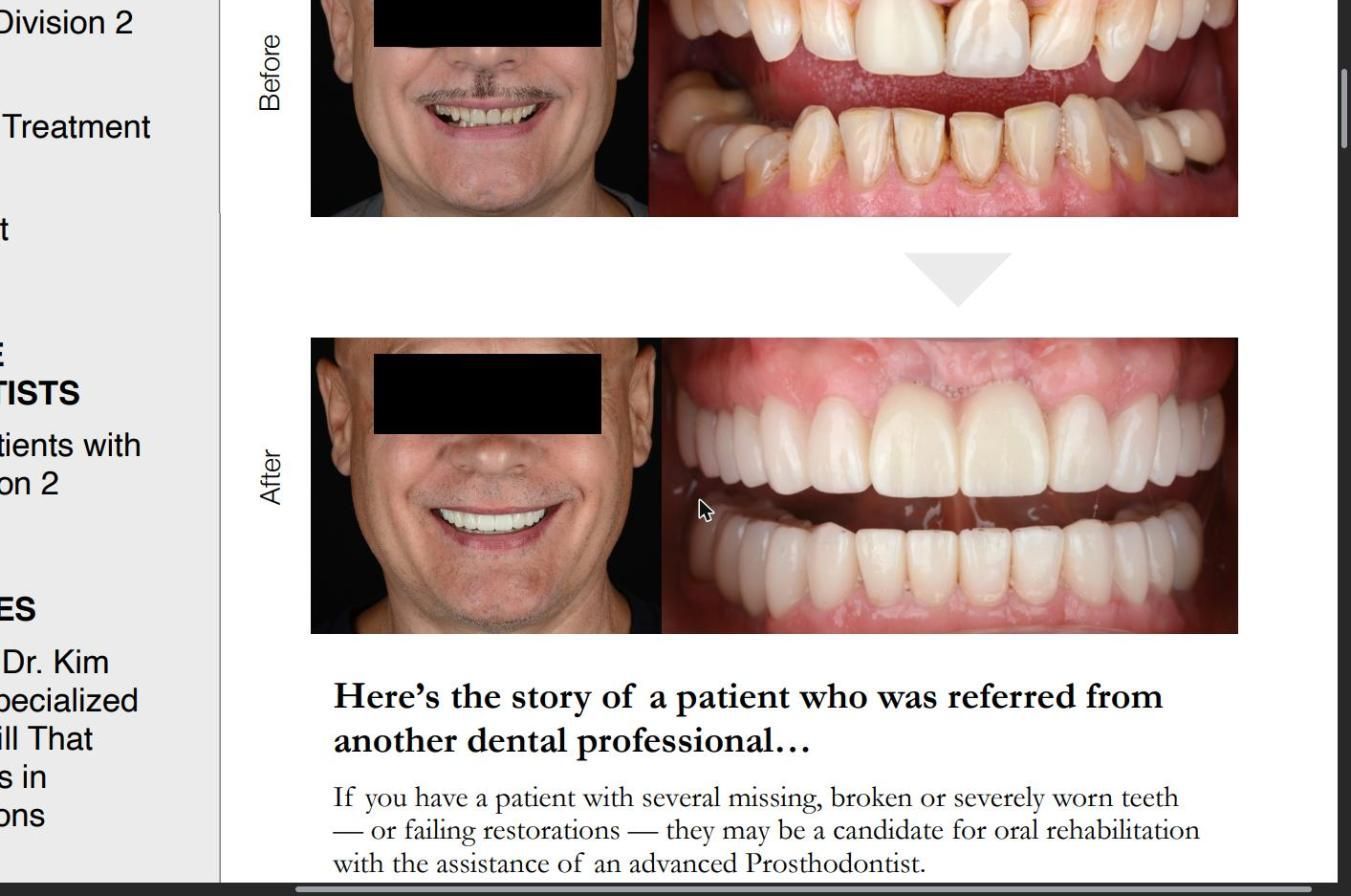
Here’s the story of a patient who was referred from another dental professional…
If you have a patient with several missing, broken or severely worn teeth — or failing restorations — they may be a candidate for oral rehabilitation with the assistance of an advanced Prosthodontist.
In this issue
- Case Summary: Full Mouth Reconstruction for a Class II Division 2 Patient – Planning & Treatment, Final Result
- Tips from the Prosthodontists: 5 Keys for Patients with Class II Division 2
- Complex Cases: Dr. Pallotto & Dr. Kim each have specialized training & skill that helps patients in these situations
Do you have a patient in a complex situation?
If you have a question about a case and want another opinion, give our office a call. Or, if there’s a case that you want to work together on, please see the enclosed referral info sheet to learn more about what you and your patient can expect when referring to our specialty office. We will take great care of your patient and keep you informed. Dental professionals refer to us as The Complex Case Specialists™ because we perform complex cases every day.
Case Summary: Full Mouth Reconstruction for a Class II Division 2 Patient
by Don Kim, DDS, MS, FACP, Board Certified Prosthodontist at MADE Dental Implant & Prosthodontics Center
Patient “Robert” was referred due to his complex needs. He said, “I need an implant in the front, but my dentist said he cannot place a crown because my bite is too deep.” His dental history included caries, root canals on 8, 9, tooth loss, resin build up and overall inconsistent dental care for over 20 years. As prosthodontists, we have experience with complex cases, and are comfortable treating patients with high esthetic demands because we often treat complicated dental issues and have developed protocols to ensure a high esthetic and functional outcome for the restorations.
I presented Robert with three options: Fixed … Fixed with ortho … and Fixed/removable. Robert chose the Fixed option, and his treatment plan included the following phases:
Planning & Treatment
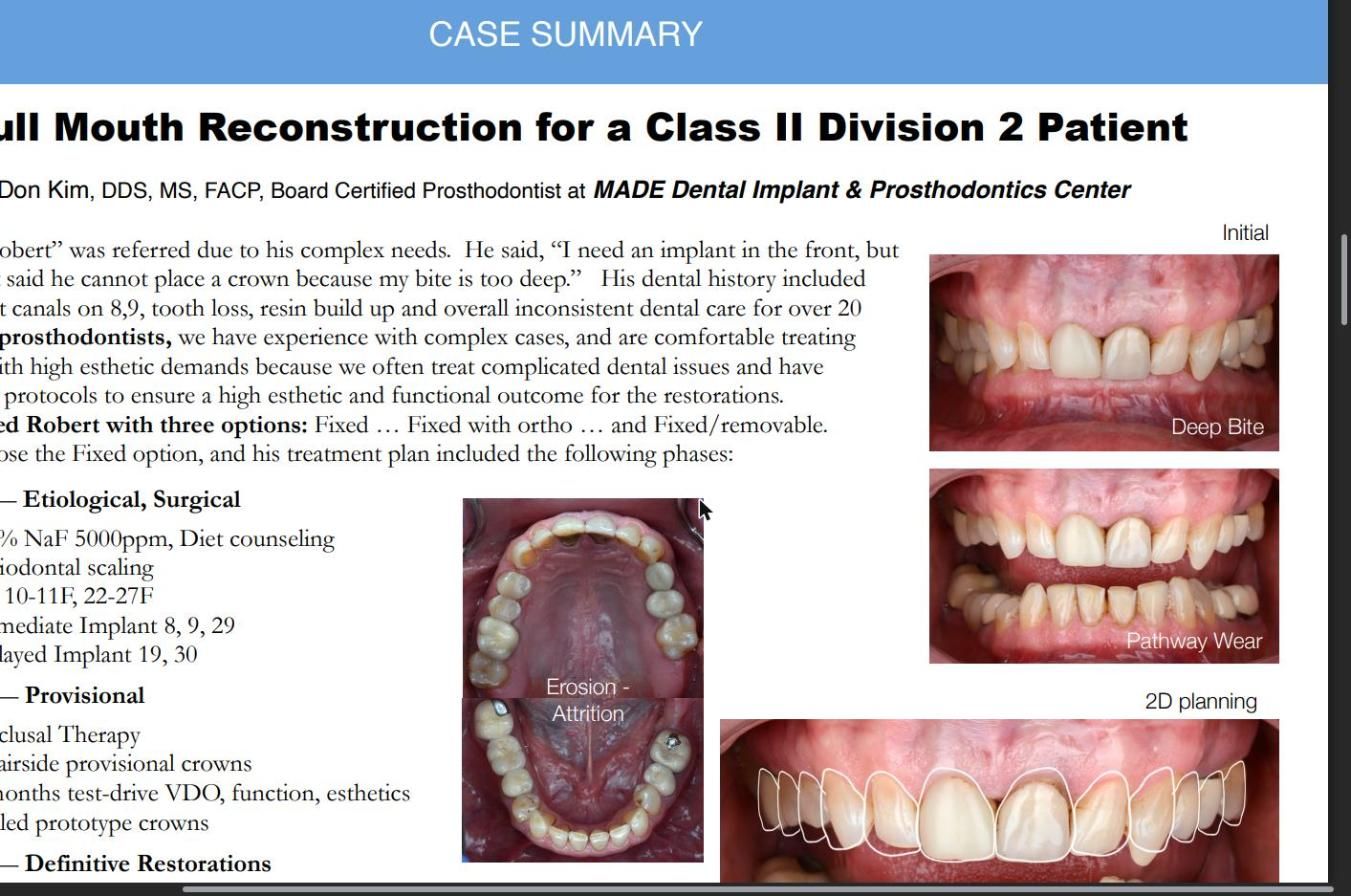
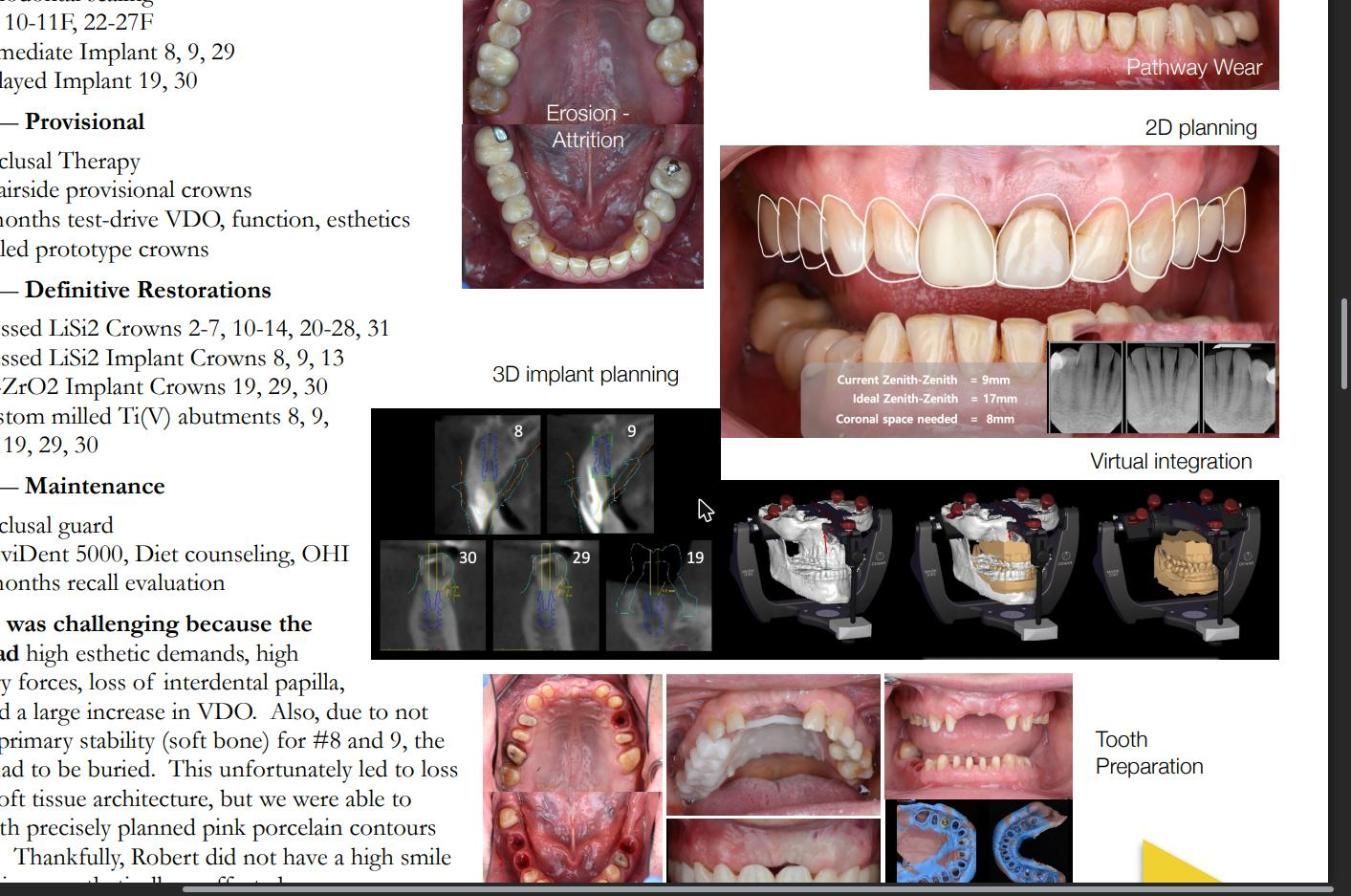
Phase 1 — Etiological, Surgical
- 1.1% NaF 5000ppm, Diet counseling
- Periodontal scaling
- CL 10-11F, 22-27F
- Immediate Implant 8, 9, 29
- Delayed Implant 19, 30
Phase 2 — Provisional
- Occlusal Therapy
- Chairside provisional crowns
- 4 months test-drive VDO, function, esthetics
- Milled prototype crowns
Phase 3 — Definitive Restorations
- Pressed LiSi2 Crowns 2-7, 10-14, 20-28, 31
- Pressed LiSi2 Implant Crowns 8, 9, 13
- 3Y-ZrO2 Implant Crowns 19, 29, 30
- Custom milled Ti(V) abutments 8, 9, 13, 19, 29, 30
Phase 4 — Maintenance
- Occlusal guard
- PreviDent 5000, Diet counseling, OHI
- 4 months recall evaluation
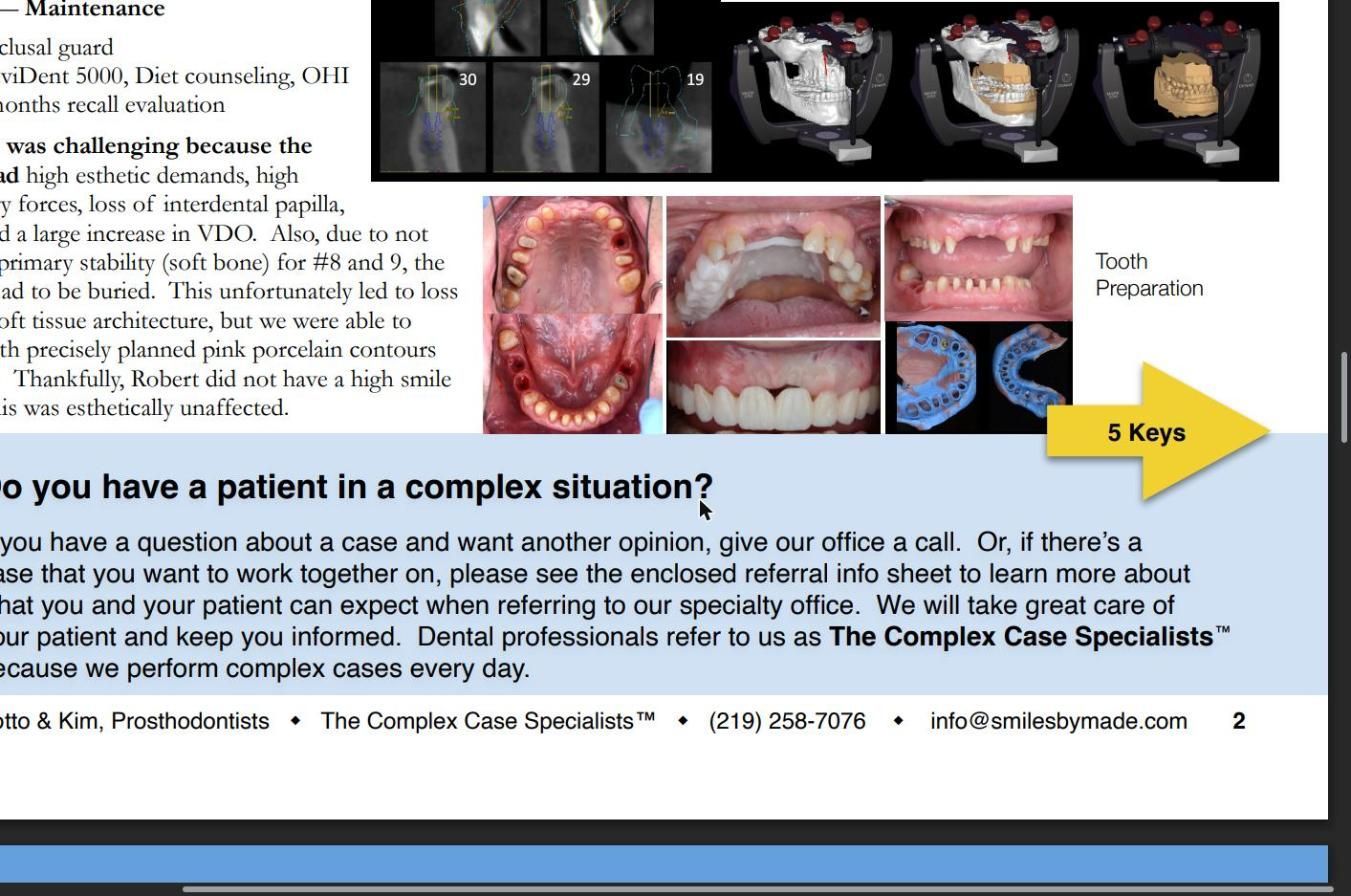
This case was challenging because the patient had high esthetic demands, high masticatory forces, loss of interdental papilla, and needed a large increase in VDO. Also, due to not achieving primary stability (soft bone) for #8 and 9, the implants had to be buried. This unfortunately led to loss of some soft tissue architecture, but we were able to recover with precisely planned pink porcelain contours and shade. Thankfully, Robert did not have a high smile line and this was esthetically unaffected.
Initial findings and planning: pathway wear, deep bite, erosion – attrition, 2D planning, 3D implant planning, virtual integration and tooth preparation.
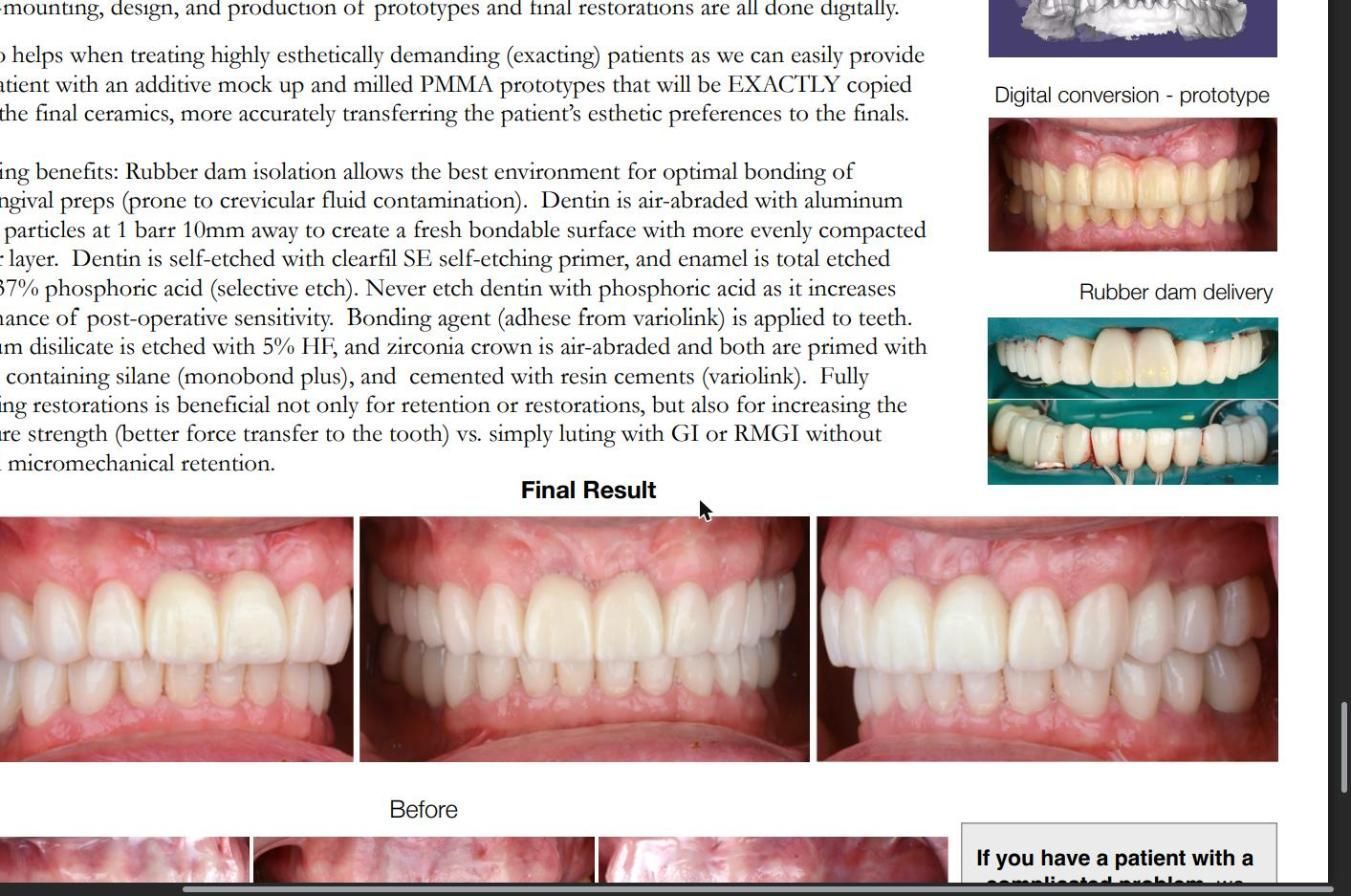
Final Result
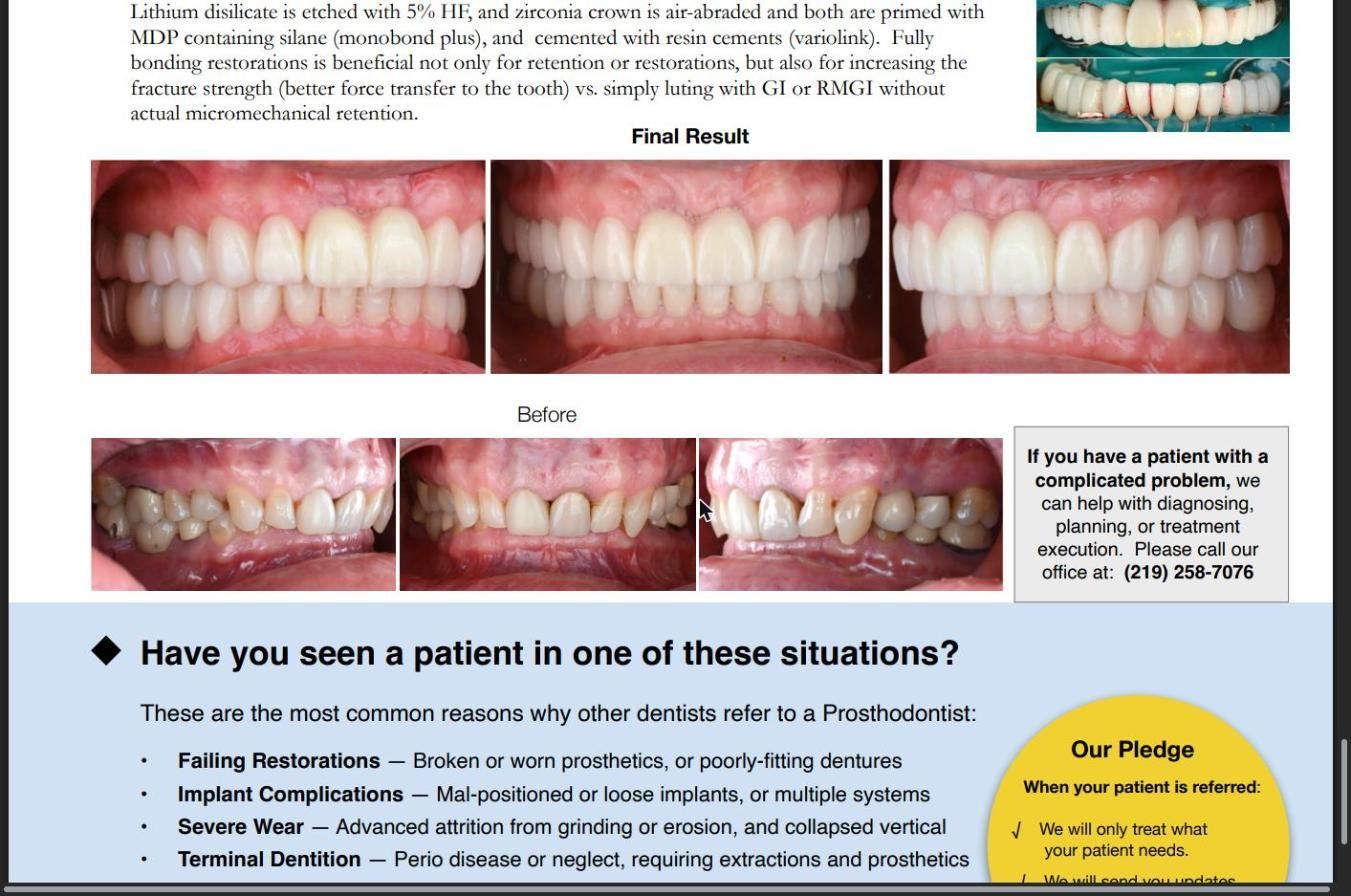
Photos from treatment: rubber dam delivery, provisional – prep overlay, and digital conversion – prototype.
Tips from the Prosthodontists: 5 Keys for Patients with Class II Division 2
1. Deprogramming severe occlusal disease
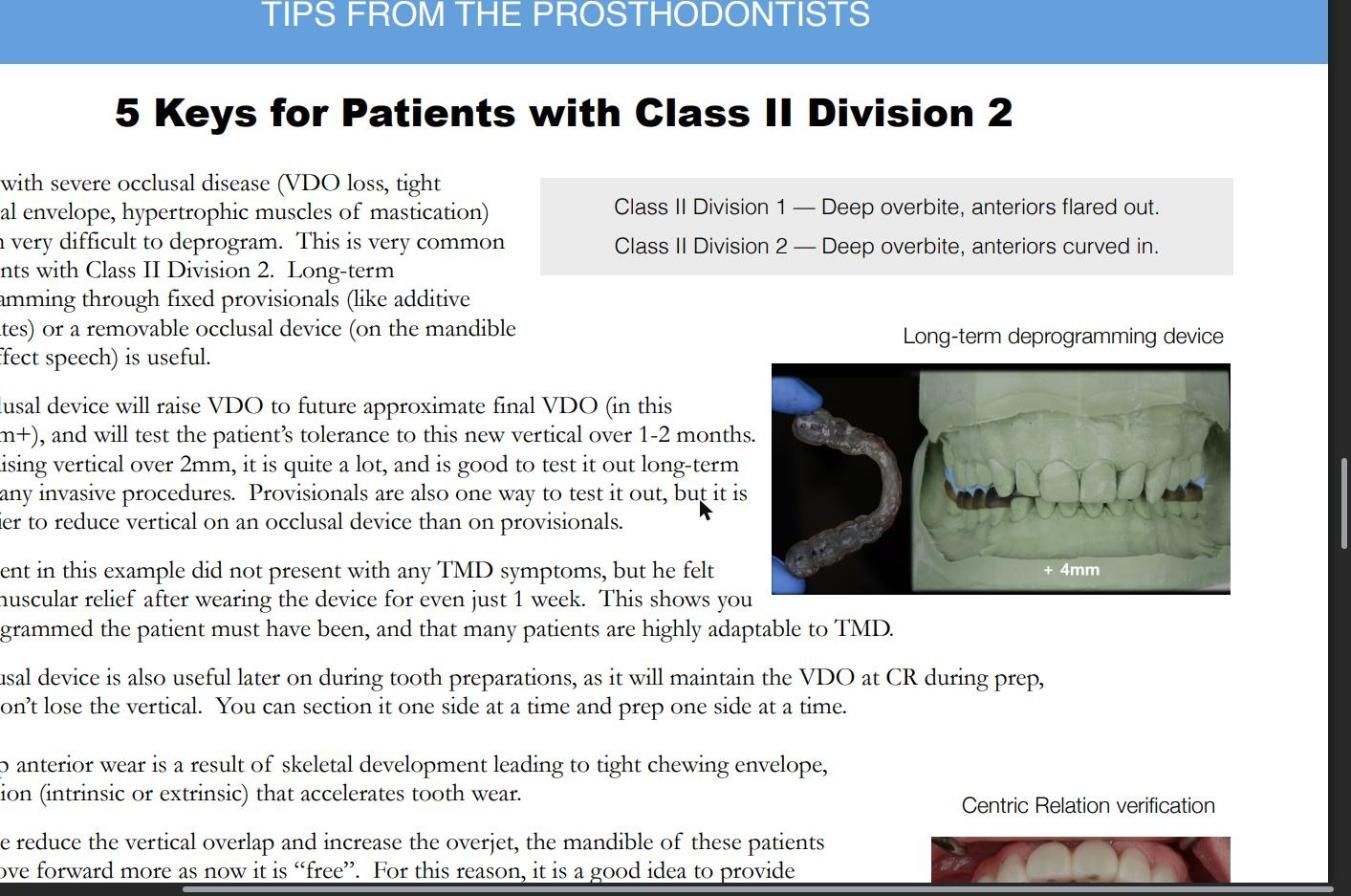
Patients with severe occlusal disease (VDO loss, tight functional envelope, hypertrophic muscles of mastication) are often very difficult to deprogram. This is very common for patients with Class II Division 2. Long-term deprogramming through fixed provisionals (like additive composites) or a removable occlusal device (on the mandible to not affect speech) is useful.
The occlusal device will raise VDO to future approximate final VDO (in this case 4mm+), and will test the patient’s tolerance to this new vertical over 1-2 months. When raising vertical over 2mm, it is quite a lot, and is good to test it out long-term prior to any invasive procedures. Provisionals are also one way to test it out, but it is a lot easier to reduce vertical on an occlusal device than on provisionals.
The patient in this example did not present with any TMD symptoms, but he felt instant muscular relief after wearing the device for even just 1 week. This shows you how programmed the patient must have been, and that many patients are highly adaptable to TMD. An occlusal device is also useful later on during tooth preparations, as it will maintain the VDO at CR during prep, so you don’t lose the vertical. You can section it one side at a time and prep one side at a time.
2. Deep anterior wear and “long centric”
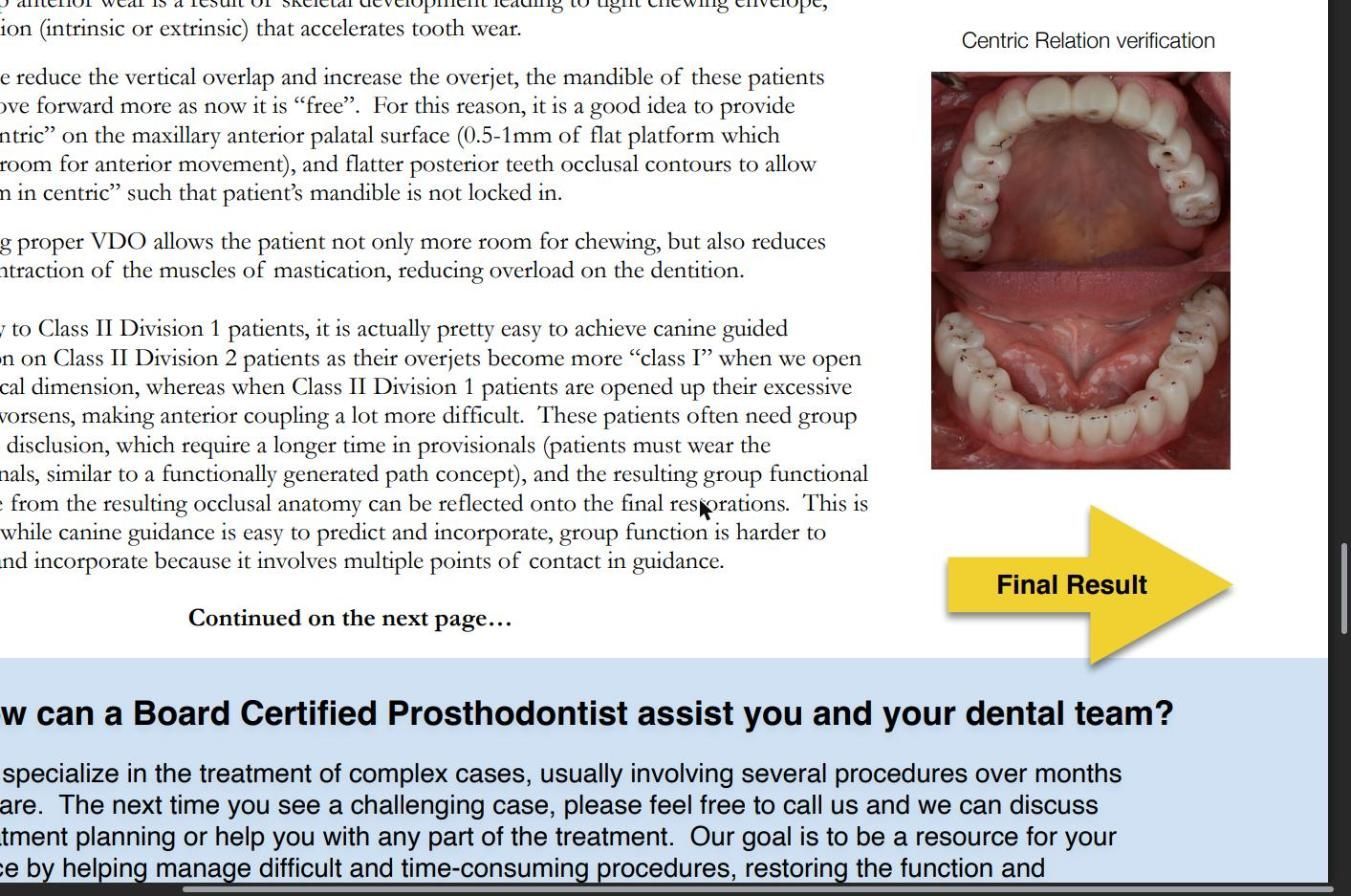
The deep anterior wear is a result of skeletal development leading to tight chewing envelope, and erosion (intrinsic or extrinsic) that accelerates tooth wear. When we reduce the vertical overlap and increase the overjet, the mandible of these patients often move forward more as now it is “free”. For this reason, it is a good idea to provide “long centric” on the maxillary anterior palatal surface (0.5-1mm of flat platform which provide room for anterior movement), and flatter posterior teeth occlusal contours to allow “freedom in centric” such that patient’s mandible is not locked in. Restoring proper VDO allows the patient not only more room for chewing, but also reduces hypercontraction of the muscles of mastication, reducing overload on the dentition.
3. Canine guidance vs. group function
Contrary to Class II Division 1 patients, it is actually pretty easy to achieve canine guided disclusion on Class II Division 2 patients as their overjets become more “class I” when we open the vertical dimension, whereas when Class II Division 1 patients are opened up their excessive overjet worsens, making anterior coupling a lot more difficult. These patients often need group function disclusion, which require a longer time in provisionals (patients must wear the provisionals, similar to a functionally generated path concept), and the resulting group functional guidance from the resulting occlusal anatomy can be reflected onto the final restorations. This is because while canine guidance is easy to predict and incorporate, group function is harder to predict and incorporate because it involves multiple points of contact in guidance.
Class II Division 1 — Deep overbite, anteriors flared out. Class II Division 2 — Deep overbite, anteriors curved in.
4. The “Digilog” workflow
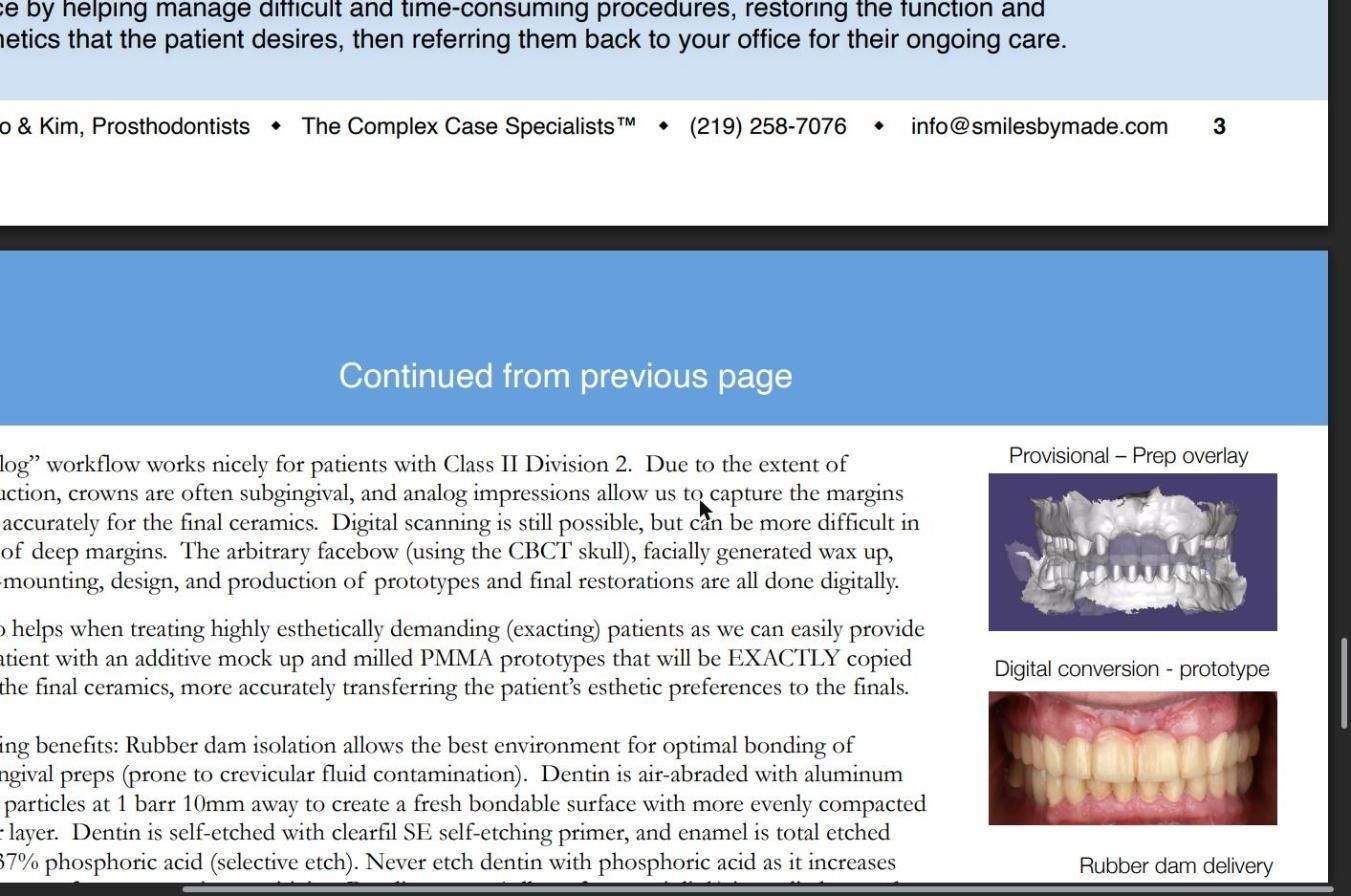
“Digilog” workflow works nicely for patients with Class II Division 2. Due to the extent of destruction, crowns are often subgingival, and analog impressions allow us to capture the margins more accurately for the final ceramics. Digital scanning is still possible, but can be more difficult in cases of deep margins. The arbitrary facebow (using the CBCT skull), facially generated wax up, cross-mounting, design, and production of prototypes and final restorations are all done digitally. It also helps when treating highly esthetically demanding (exacting) patients as we can easily provide the patient with an additive mock up and milled PMMA prototypes that will be EXACTLY copied onto the final ceramics, more accurately transferring the patient’s esthetic preferences to the finals.
5. Bonding benefits
Rubber dam isolation allows the best environment for optimal bonding of subgingival preps (prone to crevicular fluid contamination). Dentin is air-abraded with aluminum oxide particles at 1 barr 10mm away to create a fresh bondable surface with more evenly compacted smear layer. Dentin is self-etched with clearfil SE self-etching primer, and enamel is total etched with 37% phosphoric acid (selective etch). Never etch dentin with phosphoric acid as it increases the chance of post-operative sensitivity. Bonding agent (adhese from variolink) is applied to teeth. Lithium disilicate is etched with 5% HF, and zirconia crown is air-abraded and both are primed with MDP containing silane (monobond plus), and cemented with resin cements (variolink). Fully bonding restorations is beneficial not only for retention or restorations, but also for increasing the fracture strength (better force transfer to the tooth) vs. simply luting with GI or RMGI without actual micromechanical retention.
Complex Cases: How Can a Board Certified Prosthodontist Assist You and Your Dental Team?
We specialize in the treatment of complex cases, usually involving several procedures over months of care. The next time you see a challenging case, please feel free to call us and we can discuss treatment planning or help you with any part of the treatment. Our goal is to be a resource for your office by helping manage difficult and time-consuming procedures, restoring the function and esthetics that the patient desires, then referring them back to your office for their ongoing care.
Have you seen a patient in one of these situations?
These are the most common reasons why other dentists refer to a Prosthodontist:
- Failing Restorations — Broken or worn prosthetics, or poorly-fitting dentures
- Implant Complications — Mal-positioned or loose implants, or multiple systems
- Severe Wear — Advanced attrition from grinding or erosion, and collapsed vertical
- Terminal Dentition — Perio disease or neglect, requiring extractions and prosthetics
- Edentulous Problems — Resorbed ridges or lack of bone, wanting a fixed solution
- Occlusal Issues — Advanced mal-occlusion, jaw discrepancies, canted plane
- Challenging Esthetics — Un-esthetic restorations, high smile line, high expectations
- Missing Anteriors — Central incisors from trauma or laterals from genetics
Our Pledge
When your patient is referred:
- We will only treat what your patient needs.
- We will send you updates.
- We will be part of your team, not take over your patients.
Do you want another opinion on a complex case? Or to talk and share ideas?
There are many ways we can help each other by working together on complex cases and by sharing knowledge and experience. If you’d like to discuss a difficult procedure, or talk on the phone about how we can help each other, please call or email our office with specific days and times when you are available.
If you have a patient with a complicated problem, we can help with diagnosing, planning, or treatment execution. Please call our office at (219) 258-7076 or email info@smilesbymade.com.
Referring Doctors All Issues Download the PDF
Drs. Pallotto & Kim, Prosthodontists · The Complex Case Specialists™ · (219) 258-7076 · info@smilesbymade.com · © Sams Media Group, LLC
