
Advances in Prosthodontics Winter 2026
New Findings & Best Practices for Cosmetic & Restorative Dentistry
Do You Have a Patient with Periodontal Disease?
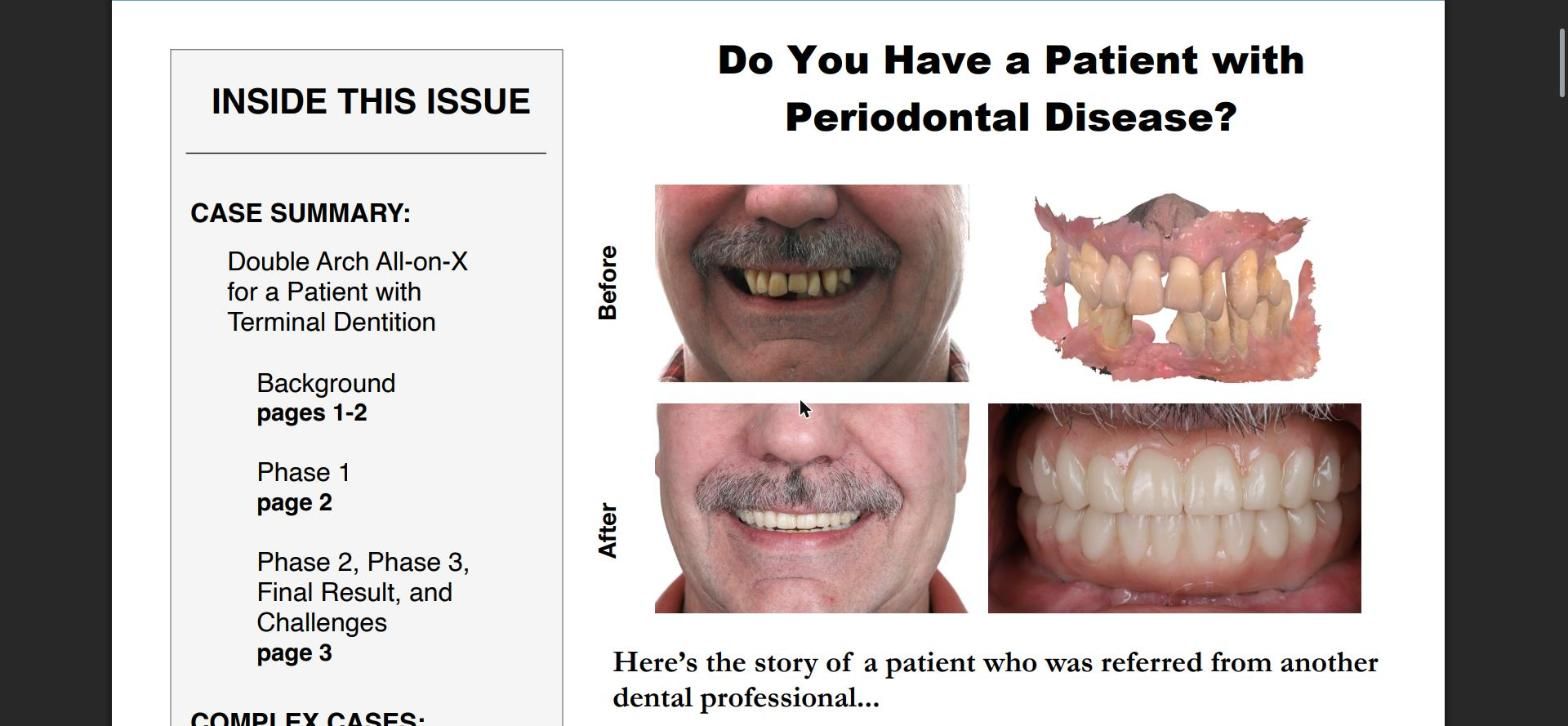
Here’s the story of a patient who was referred from another dental professional…
Patient “Bob” was 69 years old when he was referred to our specialty practice. He had been battling advanced periodontal disease for many years. His son was getting married in several months and he wanted to fix his smile before the wedding. We did our full diagnostic workup, including CBCT and PAs, to fully understand Bob’s situation and properly present his treatment options. We confirmed advanced generalized periodontal disease, and noted severe horizontal and vertical bone loss. We reviewed these findings with Bob and explained his diagnosis of terminal dentition.
If you have a patient with several missing, broken or severely worn teeth, or periodontal disease, they may be a candidate for oral rehabilitation with the assistance of an advanced Prosthodontist.
Inside this issue
- Case Summary: Double Arch All-on-X for a Patient with Terminal Dentition. Background, Phase 1, Phase 2, Phase 3, Final Result, and Challenges.
- Complex Cases: Dr. Pallotto & Dr. Kim each have specialized training and skill that helps patients in these situations.
Case Summary: Double Arch All-on-X for a Patient with Terminal Dentition
by Anthony Pallotto, DDS, MS, FACP, Board Certified Prosthodontist at MADE Dental Implant & Prosthodontics
We have several options when treating terminal dentition, with broad categories of prosthetics being removable, implant-retained but removable, and implant-supported fixed. We always present all treatment options to patients, but Bob was not interested in anything removable. He told us that his wife had full mouth extractions and a removable denture, which he said caused a “very unhappy time” for her. While removable options work for some patients, Bob chose a fixed implant solution (All-on-X) for both the upper and lower jaws due to the enhanced stability. Bob’s treatment sequence included the following 3 phases:
Phase 1: Planning
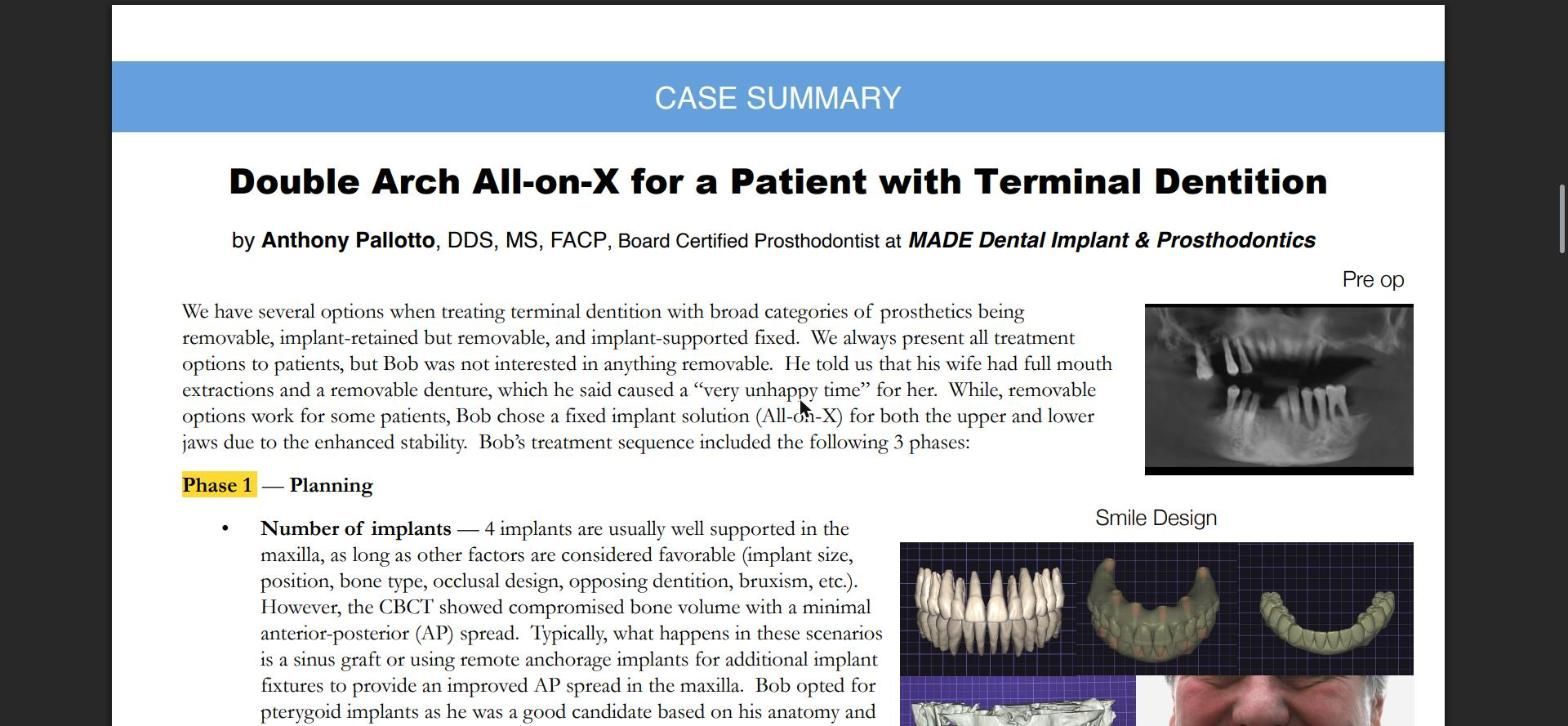
- Number of implants: 4 implants are usually well supported in the maxilla, as long as other factors are considered favorable (implant size, position, bone type, occlusal design, opposing dentition, bruxism, etc.). However, the CBCT showed compromised bone volume with a minimal anterior-posterior (AP) spread. Typically, what happens in these scenarios is a sinus graft or using remote anchorage implants for additional implant fixtures to provide an improved AP spread in the maxilla. Bob opted for pterygoid implants as he was a good candidate based on his anatomy and he wanted to avoid additional time and surgery for grafted bone. Given this decision, more than 4 implants were indicated to overcome anatomical limitations of his atrophic maxilla. Also, due to infection in the 4/5 and anterior sinus wall position, an implant configuration at the 5/7 location was planned to have a crossed apex. This is a commonly utilized strategy, often in the 8/9 region towards the midline; however, it’s a strategy that can be used elsewhere with careful planning.
- Generalized opacity in the maxillary sinus: We discussed with Bob that his left maxillary sinus had notably more opacity visible in the CBCT, with a differential diagnosis indicating carotid artery calcification (a marker of atherosclerosis and risk of cardiovascular events). Bob was referred to ENT and a cardiologist. Chronic sinusitis was managed with antibiotics prior to implant surgery, and cardiology performed diagnostics, clearance, and began the patient on medication to manage his LDL cholesterol.
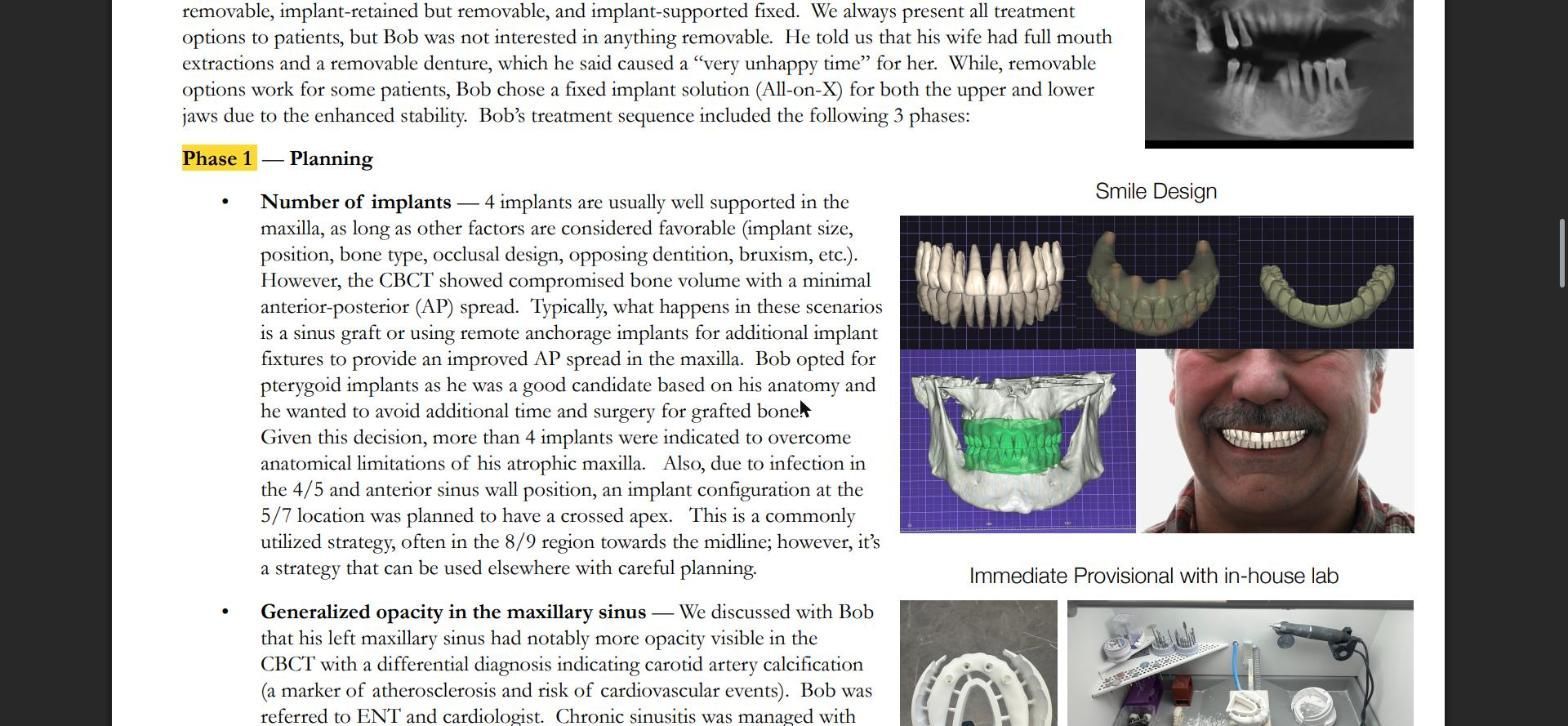
- Esthetics and phonetics: Prior to surgery, we design a smile in harmony with function and the patient’s face shape for ideal esthetics. Digital smile design principles were utilized in CAD software (Exocad) at our in-house laboratory to create a custom smile for Bob. Incisal edge position was determined by smile line evaluation, rest position, and fricative sounds (“fifty-five”). Vertical dimension was evaluated by sibilant sounds (“sixty six”), closest speaking space, rest space, and facial thirds/esthetics. A centric relation record was made with deprogramming, bimanual manipulation, and first point of contact interocclusal registration.
Phase 2: Surgery
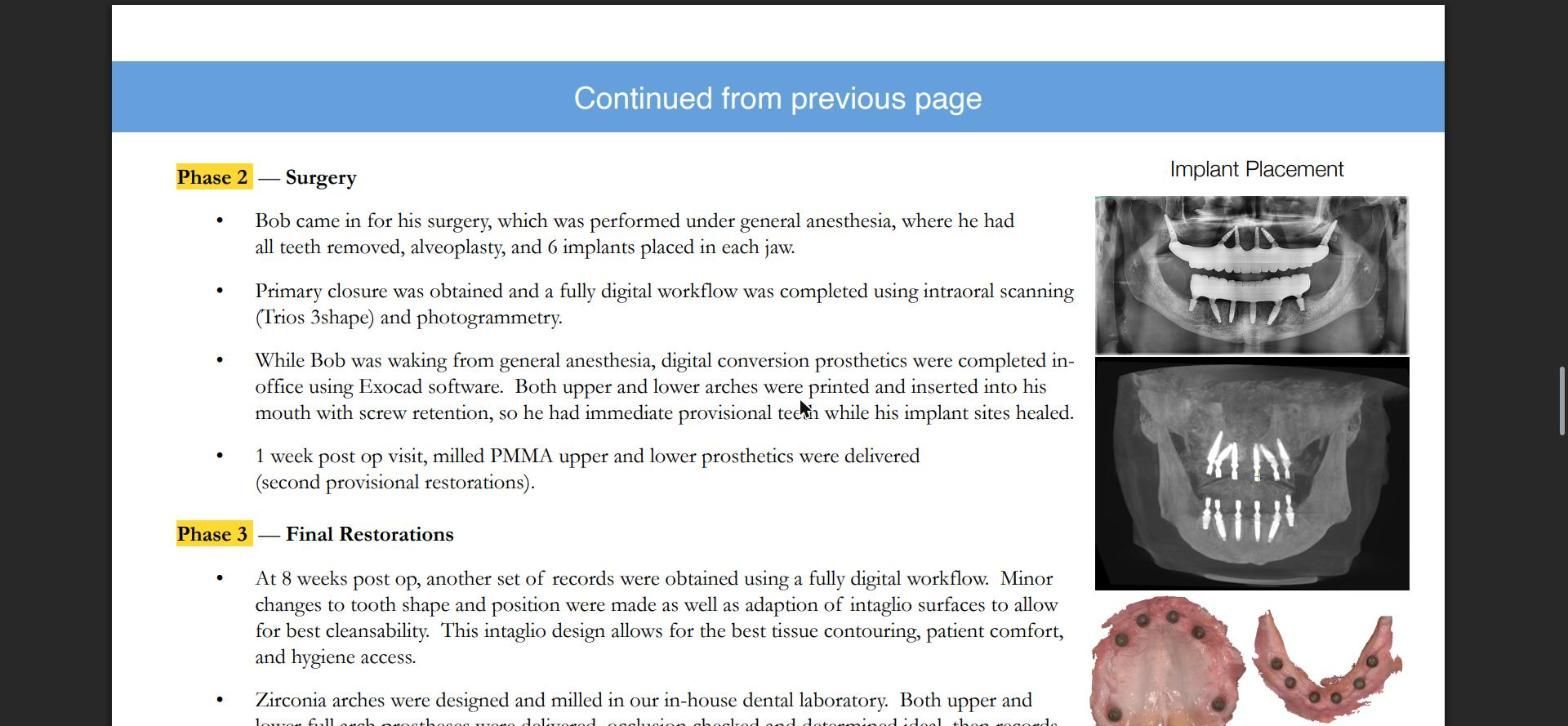
- Bob came in for his surgery, which was performed under general anesthesia, where he had all teeth removed, alveoplasty, and 6 implants placed in each jaw.
- Primary closure was obtained and a fully digital workflow was completed using intraoral scanning (Trios 3shape) and photogrammetry.
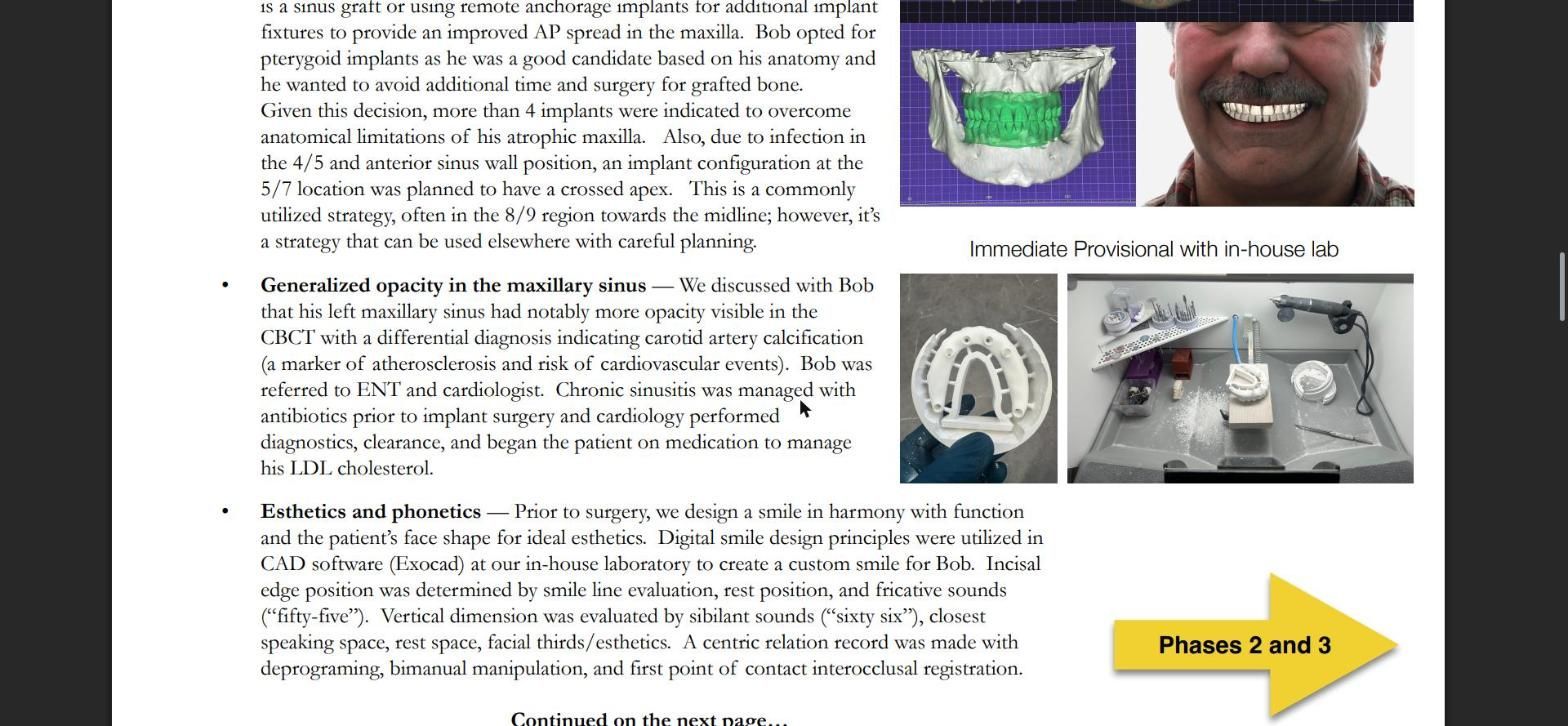
- While Bob was waking from general anesthesia, digital conversion prosthetics were completed in-office using Exocad software. Both upper and lower arches were printed and inserted into his mouth with screw retention, so he had immediate provisional teeth while his implant sites healed.
- At the 1 week post op visit, milled PMMA upper and lower prosthetics were delivered (second provisional restorations).
Phase 3: Final Restorations
- At 8 weeks post op, another set of records was obtained using a fully digital workflow. Minor changes to tooth shape and position were made, as well as adaptation of intaglio surfaces to allow for best cleansability. This intaglio design allows for the best tissue contouring, patient comfort, and hygiene access.
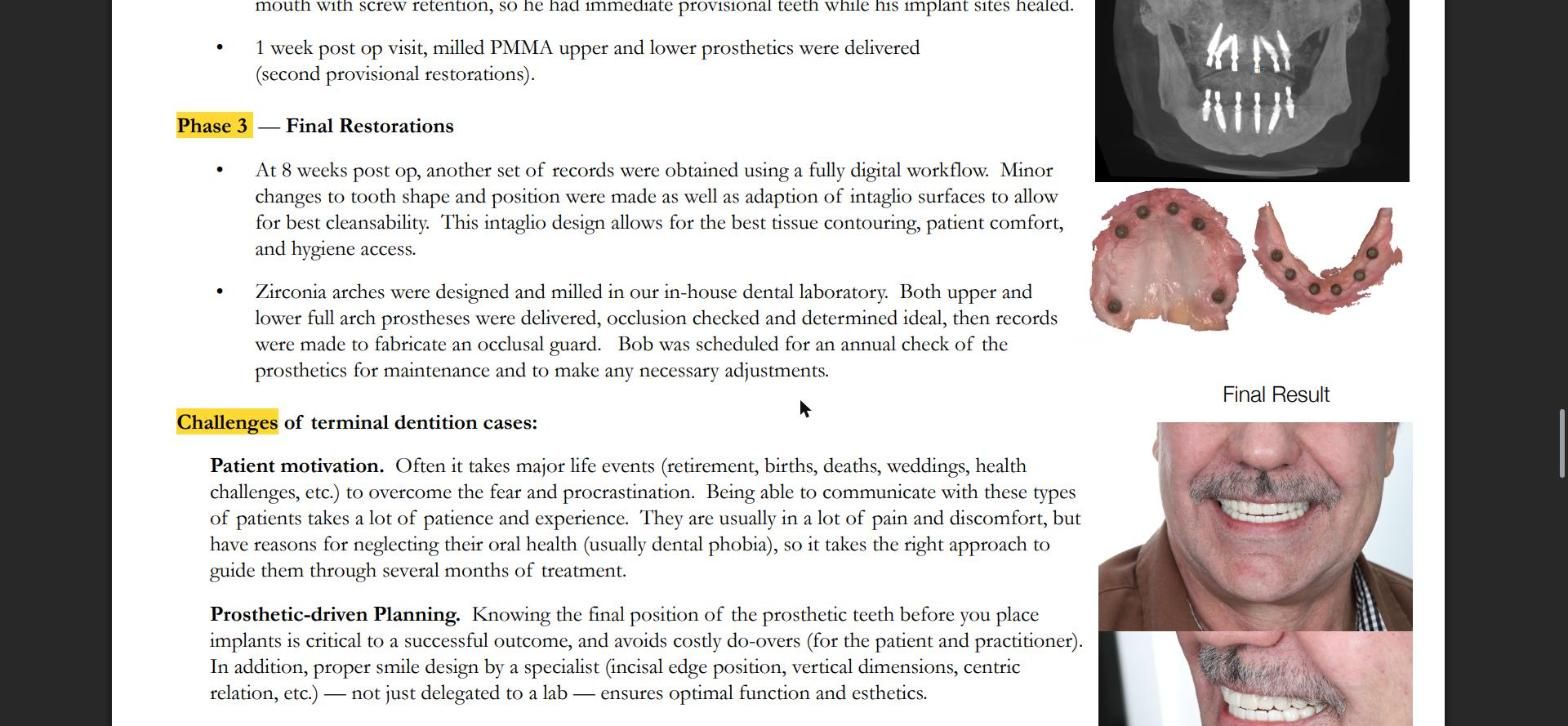
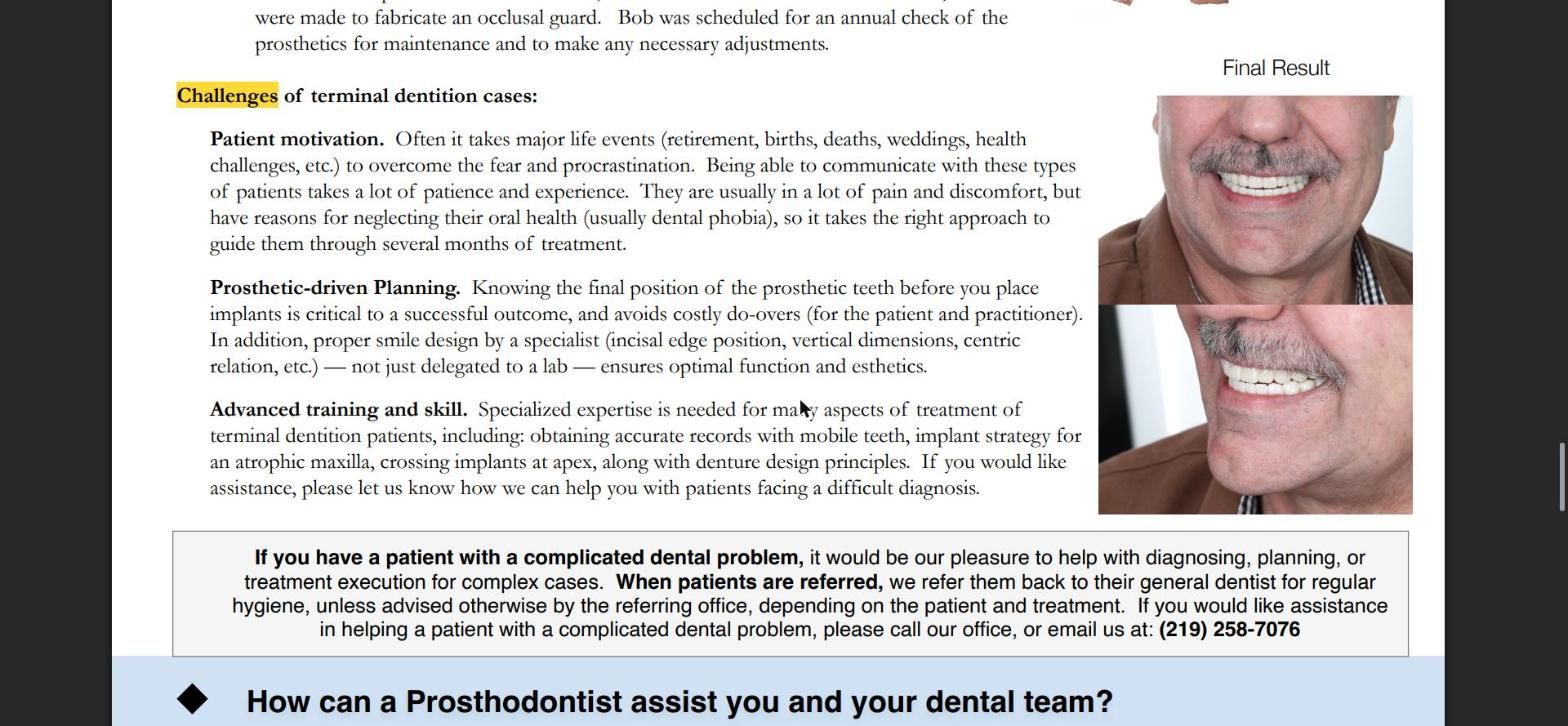
- Zirconia arches were designed and milled in our in-house dental laboratory. Both upper and lower full arch prostheses were delivered, occlusion was checked and determined ideal, then records were made to fabricate an occlusal guard. Bob was scheduled for an annual check of the prosthetics for maintenance and to make any necessary adjustments.
Final Result
Challenges of terminal dentition cases
Patient motivation. Often it takes major life events (retirement, births, deaths, weddings, health challenges, etc.) to overcome the fear and procrastination. Being able to communicate with these types of patients takes a lot of patience and experience. They are usually in a lot of pain and discomfort, but have reasons for neglecting their oral health (usually dental phobia), so it takes the right approach to guide them through several months of treatment.
Prosthetic-driven planning. Knowing the final position of the prosthetic teeth before you place implants is critical to a successful outcome, and avoids costly do-overs (for the patient and practitioner). In addition, proper smile design by a specialist (incisal edge position, vertical dimensions, centric relation, etc.), not just delegated to a lab, ensures optimal function and esthetics.
Advanced training and skill. Specialized expertise is needed for many aspects of treatment of terminal dentition patients, including: obtaining accurate records with mobile teeth, implant strategy for an atrophic maxilla, crossing implants at apex, along with denture design principles. If you would like assistance, please let us know how we can help you with patients facing a difficult diagnosis.
If you have a patient with a complicated dental problem, it would be our pleasure to help with diagnosing, planning, or treatment execution for complex cases. When patients are referred, we refer them back to their general dentist for regular hygiene, unless advised otherwise by the referring office, depending on the patient and treatment. If you would like assistance in helping a patient with a complicated dental problem, please call our office, or email us at: (219) 258-7076
How Can a Prosthodontist Assist You and Your Dental Team?
We specialize in the treatment of complex cases, usually involving several procedures over months of care. The next time you see a challenging case, please feel free to call us and we can discuss treatment planning, or we can help you with any part of the treatment. Our goal is to be a resource for your office by helping manage difficult and time-consuming procedures, restoring the function and esthetics that the patient desires, then referring them back to your office for their ongoing care.
These “complex cases” may drain your time. Prosthodontists can be a resource to ask questions or help properly stage and manage complex treatment, often involving multiple specialists and providers over months of care. They can coordinate repair or replacement of teeth with fixed or removable prosthetics, to give patients ideal function and esthetics, then refer the patient back to you.
Have you seen a patient in one of these situations?
These are the most common reasons why other dentists refer to a Prosthodontist:
- Failing Restorations: broken or worn prosthetics, or poorly-fitting dentures
- Implant Complications: mal-positioned or loose implants, or multiple systems
- Severe Wear: advanced attrition from grinding or erosion, and collapsed vertical
- Terminal Dentition: perio disease or neglect, requiring extractions and prosthetics
- Edentulous Problems: resorbed ridges or lack of bone, wanting a fixed solution
- Occlusal Issues: advanced mal-occlusion, jaw discrepancies, canted plane
- Challenging Esthetics: un-esthetic restorations, high smile line, high expectations
- Missing Anteriors: central incisors from trauma or laterals from genetics
Our Pledge
When your patient is referred:
- We will only treat what your patient needs.
- We will send you updates.
- We will be part of your team, not take over your patients.
Do you have a patient in Bob’s situation, or another complex case?
If you have a question about a case and want another opinion, give our office a call. Or, if there’s a case that you want to work together on, please see our referral information to learn more about what you and your patient can expect when referring to our specialty office. We will take great care of your patient and keep you informed. Dental professionals refer to us as The Complex Case Specialists™ because we perform complex cases every day.
There are many ways we can help each other by working together on complex cases and by sharing knowledge and experience. If you’d like to discuss a difficult procedure, or talk on the phone about how we can help each other, please call or email our office with specific days and times when you are available.
About Our Specialty Practice
MADE Dental Implant & Prosthodontics Center is a specialty dental practice focusing on fixed and removable prostheses, dental implants, and all phases of esthetic dentistry. As Prosthodontists, Drs. Pallotto & Kim at MADE have training and private practice experience that make treatments of complex cases more successful, including the following examples:
- Patients with ill-fitting dentures, severely worn or damaged teeth can receive a single dental implant or a full arch of natural-looking teeth in a day.
- Patients who have suffered from traumatic injury, congenitally missing teeth, or a chronic condition can receive oral prostheses, which may be a combination of dental implants, crowns, bridges, or veneers.
- Patients with severe neglect of their oral health can receive a full mouth rehabilitation to restore function & esthetics.
In addition, the MADE office is equipped with an in-house dental lab to create custom restorations for referred patients from only the best materials using the latest technology. This allows your patients to receive individual customization for higher satisfaction, and in less time.
“As the referring dentist, you know your patient’s mouth and have key insight into your patient’s needs. We want to work with you to provide your patients with the best possible treatment outcomes. We will treat your patient in a manner that will reflect well on you and strengthen your relationship with your patient. We are here to make you look good! When your patient’s care is completed, they are referred back to your office for their ongoing dental care. We are grateful for your colleagueship and trust with your patients!” Anthony Pallotto, Board Certified Prosthodontist, and Don Kim, Board Eligible Prosthodontist.
Call (219) 258-7076 Email info@smilesbymade.com
Drs. Pallotto & Kim, Prosthodontists · The Complex Case Specialists™ · See more examples of complex cases online at AdvancedProsthodontist.com
